


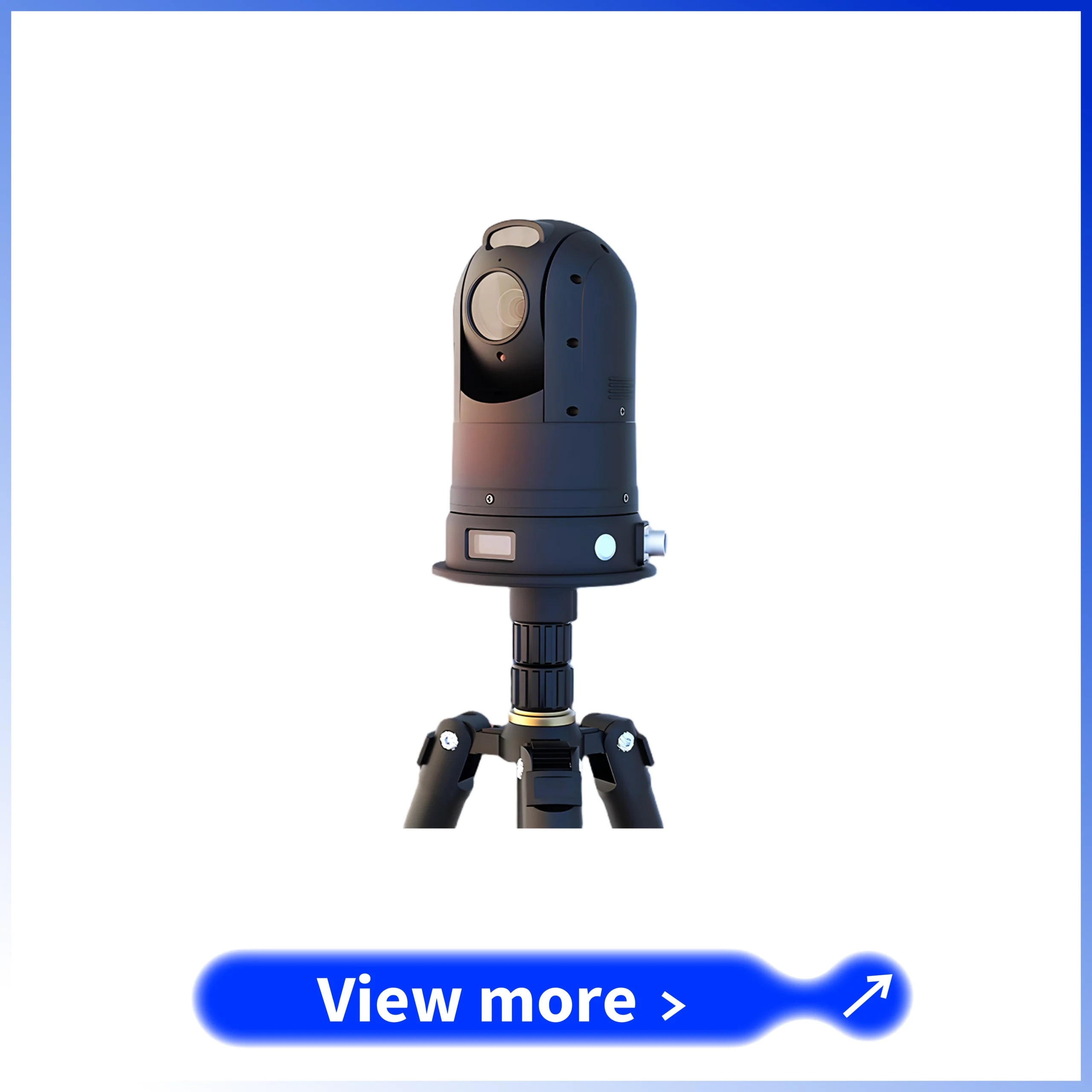
What is a rapid deployment PTZ camera?
A rapid deployment PTZ camera is a portable pan-tilt-zoom surveillance device that can be installed, moved or redeployed faster than a permanent wired camera system. It is useful when a site is temporary, changing or affected by an emergency.
The SWGJ Deployment PTZ Camera page describes S95, S100 and S110 rapid deployment products for temporary security perimeters, emergency command centers, mobile law enforcement, rescue operations, construction sites, traffic control and accident management.
A portable PTZ camera does not replace a permanent surveillance system in every project. Its main value is speed, flexibility and situational awareness when fixed infrastructure is unavailable or cannot be installed immediately.
When should an emergency team use a portable PTZ camera?
Emergency command and rescue operations
After a fire, industrial incident, traffic accident or natural disaster, responders may need an overview of the scene before a permanent camera network is available. A battery-powered PTZ can provide live images to a command team while personnel focus on access control, rescue and coordination.
Temporary security perimeters
Events, construction projects, infrastructure repairs and public activities may need a temporary boundary. A portable camera can monitor an entrance, vehicle route or restricted area without installing a permanent underground cable route.
Mobile law enforcement and traffic control
The SWGJ S95 page lists mobile law enforcement, traffic control and accident management among its intended uses. With PTZ movement, optical zoom, GPS or similar positioning options and local storage, a field team can establish a temporary observation point and later move it to another location.
Industrial emergency response
The S100 product description adds gas detection for carbon monoxide, hydrogen sulfide, oxygen and methane, together with 4G transmission and active sound-and-light alarms. This makes it a specialized option for selected chemical, pipeline, firefighting and environmental safety tasks. Gas measurement, alarms and certification must be matched to the actual response plan and equipment documentation.
What are the main advantages of a rapid deployment PTZ camera?
A portable PTZ system can provide several operational benefits:
- Fast setup: The S95 is described as a battery-powered PTZ for rapid installation without complex wiring.
- Remote observation: Wireless transmission can send video to a mobile device or command platform when the network is available.
- Flexible viewing: PTZ movement allows operators to inspect several directions and zoom into a selected area.
- Temporary redeployment: The camera can be moved as the incident or project boundary changes.
- Local recording: The S95 page lists TF-card storage up to 256 GB; the S100 page lists TF-card storage up to 256 GB.
- Night monitoring: The S95 listing includes infrared illumination up to 50 meters, while the S100 description lists a longer IR capability for its model configuration.
- Location awareness: The S95 page lists GPS, BeiDou and GLONASS or Galileo positioning options.
These specifications are model-specific. The final deployment plan must verify the supplied configuration, battery condition, radio coverage, mounting method and local regulations.
S95 or S100: which rapid deployment model fits the project?
| Requirement | S95 Rapid Deployment PTZ | S100 Gas Detection Camera |
|---|---|---|
| Primary role | Temporary visual surveillance | Visual surveillance plus gas detection |
| Power | 3.7V, 15,000mAh battery listed on page | Built-in DC 12.6V, 120Wh battery listed on page |
| Network | Dual-frequency Wi-Fi and Wi-Fi AP | 4G and Wi-Fi connectivity listed |
| PTZ | 360° continuous pan, -15° to 90° tilt | 360° pan, -30° to 90° tilt listed |
| Optical zoom | 10x listed | 20x listed |
| Local storage | TF card up to 256 GB | TF card up to 256 GB |
| Special function | Portable field monitoring | CO, H2S, O2 and CH4 gas detection listed |
| Protection | IP67 listed | IP67 in the parameter section; Ex ic IIC T4 Gc described for the gas-detection configuration |
The S95 is a logical choice when the main need is fast visual coverage. The S100 should be evaluated when gas readings and on-site gas alarms are part of the emergency requirement. Do not select the S100 only because it has more features; gas sensor calibration, alarm thresholds, certification and operating procedures must be included in the project.
How should a rapid deployment PTZ camera be positioned?
Choose a position that provides a high-value overview while remaining accessible for battery management and safe operation. Common mounting options listed for the S100 include a magnetic suction cup, tripod, wall mount, ceiling mount and pole mounting.
Before deployment, identify:
- The main approach route.
- The incident or work area.
- The location of responders and vehicles.
- The safe mounting surface.
- The wireless signal direction.
- The position of the command team.
- Potential glare, smoke, dust or rain.
- The battery replacement or charging point.
A PTZ camera should not be placed where vibration, vehicle impact, unstable metal or an obstructed view will reduce image quality. If a magnetic base is used, confirm the surface and wind conditions are suitable for the exact installation.
How do wireless transmission and local storage work together?
Wireless transmission provides live situational awareness, while local storage can preserve footage when the connection is unstable. The S100 description lists 4G transmission, and both the S95 and S100 pages list local TF-card storage.
Design the data path before the team arrives:
- Which SIM card or Wi-Fi network will be used?
- Is the signal strong at the mounting position?
- Who receives the live stream?
- What happens if the cellular network is congested?
- How long should local video be retained?
- How will footage be exported after the event?
- Is the device time synchronized with the command platform?
Do not assume that a wireless camera will provide unlimited continuous streaming. Video quality, bitrate, signal strength, battery state and operator usage all affect operating time and data consumption.
How should battery life be planned?
Battery performance depends on infrared illumination, PTZ movement, video bitrate, wireless transmission, temperature and recording mode. The S95 page lists working times of at least 18 hours with infrared off and at least 9 hours with infrared on under its stated configuration. The S100 page lists at least 8 hours of continuous working time for its configuration.
Use a deployment checklist:
- Charge the battery before leaving the base.
- Record the starting battery level.
- Test live view and infrared mode.
- Carry the correct charger and spare power accessories.
- Define the low-battery alert threshold.
- Keep the camera out of unnecessary continuous PTZ patrols.
- Plan a replacement or charging interval for events longer than the rated operating time.
Rated battery time is a reference, not a guarantee for every weather condition or operating pattern.
How can PTZ presets improve emergency response?
A rapid deployment PTZ camera is easier to operate when presets are created before an incident. The S95 page lists 255 presets and 8 patrols. The S100 page lists 255 presets and 4 patrols.
Create a simple preset plan:
- Preset 1: Main entrance.
- Preset 2: Incident area.
- Preset 3: Responder staging area.
- Preset 4: Vehicle route.
- Preset 5: Equipment or hazard point.
Use patrols only when they support the response objective. During a live incident, an operator may need manual control rather than an automatic patrol that moves away from a developing event.
What should be considered for gas-detection deployments?
The S100 description lists four gases: CO, H2S, O2 and CH4. This is different from ordinary video analytics. A gas-detection deployment requires a defined measurement objective, sensor maintenance, alarm thresholds, evacuation procedures and appropriate certification.
The team should confirm:
- Which gas hazards are expected?
- How is the sensor calibrated and maintained?
- Where should the camera be positioned relative to the hazard?
- Which alarm threshold triggers local sound and light?
- Which control-room action follows an alarm?
- How are gas readings recorded with video?
- Does the product certificate cover the planned atmosphere and installation?
The camera should support the site safety plan; it should not be treated as a substitute for the facility’s required gas-monitoring and emergency systems.
How does a portable PTZ compare with a permanent camera system?
| Requirement | Rapid deployment PTZ | Permanent wired camera system |
|---|---|---|
| Setup speed | Fast and portable | Slower due to cabling and construction |
| Coverage duration | Temporary or project-based | Long-term fixed coverage |
| Infrastructure | Battery and wireless options | Network, power, cabinet and cable routes |
| Redeployment | Easy to move between locations | Limited after installation |
| Recording | Local storage plus wireless platform | NVR or VMS with centralized retention |
| Best fit | Emergency, events, rescue and changing sites | Factories, warehouses and permanent facilities |
Many projects need both. A portable PTZ can provide immediate coverage while a permanent system is designed and installed.
What should be included in the deployment acceptance test?
Physical test
Check mounting stability, camera direction, enclosure condition, cable and charger accessories and the safety of the operating position.
Imaging test
Test wide view, optical zoom, focus, PTZ presets, night vision, glare, smoke or dust conditions and the visibility of the incident area.
Network test
Verify Wi-Fi or 4G signal, live view, mobile access, command-platform connection, time synchronization and reconnection after a temporary network interruption.
Power test
Record starting battery level, test infrared mode, confirm charging and verify the low-battery warning.
Response test
Confirm who controls the PTZ, who receives video, who exports evidence and who responds to a gas or intrusion alarm when the S100 configuration is used.
Frequently asked questions
What is a rapid deployment PTZ camera used for?
It provides temporary, movable video monitoring for emergency command, rescue, construction sites, traffic control, temporary events and mobile security operations.
How long can the SWGJ S95 operate?
The S95 page lists at least 18 hours with infrared off and at least 9 hours with infrared on under its stated configuration. Actual time depends on the operating mode, network and environmental conditions.
Does the S100 detect gas?
The S100 description lists detection of CO, H2S, O2 and CH4, with gas data shown in the video stream and sound-and-light alarms. The final project must verify sensor certification, calibration and alarm procedures.
Can a portable PTZ camera work without fixed network cabling?
The SWGJ deployment page describes Wi-Fi and 4G options for different models. The site still needs a usable wireless signal and an appropriate power or battery plan.
Can the camera record locally?
The S95 and S100 pages list TF-card storage up to 256 GB for their stated configurations. Confirm the actual supplied model and storage policy before deployment.
Can a rapid deployment PTZ replace a permanent surveillance system?
It can provide immediate or temporary coverage, but permanent sites generally need a planned wired camera, NVR or VMS system for long-term retention, redundancy and maintenance.
Conclusion
Rapid deployment PTZ cameras help emergency teams establish visual awareness when time, access and infrastructure are limited. Battery power, wireless transmission, PTZ control, night vision and local storage make them useful for rescue, temporary security, construction, traffic management and incident response.
SWGJ’s S95 and S100 configurations address different needs. The S95 focuses on portable visual monitoring, while the S100 adds gas detection and a specialized intrinsically safe configuration described on the product page. Select the model according to the incident plan, certification, battery duration, wireless coverage and operator workflow.