


Quick Answer: Where should an explosion-proof mini dome camera be deployed?
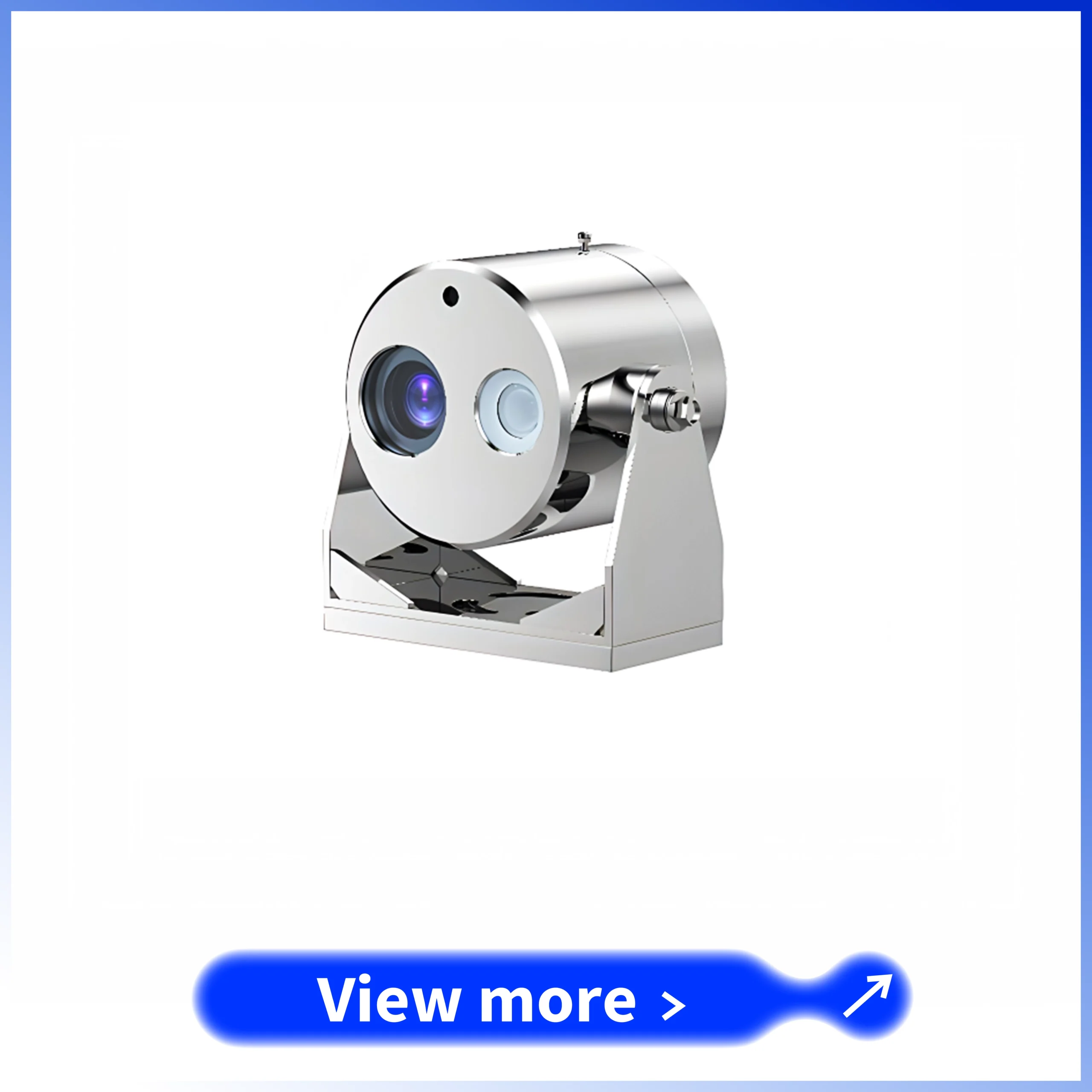
An explosion-proof mini dome camera is best deployed where a hazardous-area operator needs a compact, fixed, wide-angle view and has limited room for a conventional enclosure or external junction box. Typical examples include processing skids, pump stations, narrow corridors, offshore rig cabins, industrial elevator cabins, and monitoring poles. The SWGJ Explosion Proof Mini Dome page describes a 304 stainless steel standard housing, optional 316 stainless steel, IP68 protection, IK10 impact resistance, and use in Zone 1 and Zone 2 environments. Its integrated wiring base and side access port can simplify cable termination in space-constrained locations.
Deployment should begin with the area classification, required field of view, mounting surface, cable route, power/network design, and maintenance access—not with the camera alone. The camera is a visual surveillance device. It should not be treated as a general gas detector or as a replacement for a certified gas detection system.
Why is the mini dome format useful in a hazardous industrial space?
A confined hazardous area creates two competing requirements: the camera must be rugged enough for the environment, yet small enough not to interfere with equipment, walkways, or access panels. A large PTZ can provide useful coverage, but its body, mounting arm, and service clearance may be impractical inside a compact cabin or around a skid.
The SWGJ Explosion Proof Mini Dome Camera is described as a low-profile solution for offshore drilling rig cabins, chemical plant elevators, narrow industrial corridors, processing skids, pump stations, and monitoring poles. The product page also describes a raised base with an integrated wiring chamber and side access port. In a carefully engineered installation, that arrangement may reduce the need for a separate external junction box and keep the cable transition closer to the camera body.
The fixed viewing design is also an advantage when a site has a known inspection zone. Once the view is aligned, the operator can monitor a door, valve area, pump face, loading point, or corridor without relying on a moving mechanism. This can make the camera a practical complement to a separate PTZ used for broader area observation.
What must be confirmed before specifying the camera?
1. Confirm the hazardous-area classification
The SWGJ mini dome page identifies the camera for Zone 1 and Zone 2 hazardous environments and lists the marking Ex db IIC T6 Gb; Ex tb IIIC T80°C Db. Those markings are product information, not a substitute for the site’s hazardous-area dossier. The responsible electrical or process-safety engineer should confirm that the selected configuration, gas or dust group, temperature class, installation method, and local approval requirements are suitable for the actual location.
The product page FAQ also refers to ATEX, FCC, CE, RHOS, and other certifications. Before procurement, request the current certificates and declaration for the exact product configuration and destination market. Do not assume that an optional material, power arrangement, or accessory automatically carries the same approval scope.
2. Define the observation task
A mini dome is not automatically the right camera for every small space. Establish what the operator needs to see:
- A broad entrance or corridor view may suit the listed 2.8 mm lens.
- A more focused view of a nearby pump, access door, or process connection may suit a 4 mm, 6 mm, or 8 mm lens.
- Identification requirements should be tested at the actual mounting height, distance, lighting level, and expected movement—not inferred only from resolution.
The SWGJ page lists 2MP (1080P) and 4MP (1440P) options, fixed 2.8 mm, 4 mm, 6 mm, and 8 mm lens choices, 120 dB WDR, and IR night vision up to 30 m for the fixed mini dome specification. Confirm which combination is available for the quotation, because lens, sensor, illuminator, and network options can vary by configuration.
3. Check the physical envelope and service space
Measure the mounting surface, obstruction zones, cable bend radius, and access needed to tighten hardware or service the wiring chamber. “Compact” does not mean that the camera can be pressed against a handrail, pipe, ceiling beam, or moving machine. Keep the lens clear of splash, steam, vibration sources, and objects that could block the intended scene.
Where corrosion is a major concern, the page identifies 304 stainless steel as standard and 316 stainless steel as an optional/customizable upgrade. The materials decision should follow the site’s chemical exposure, salt-spray conditions, cleaning regime, and maintenance plan.
How should the camera be positioned for useful coverage?
Use a stable, low-vibration mounting point
A rigid wall, structural column, equipment frame, or rated pole bracket is preferable to a thin sheet panel. Vibration can soften detail, loosen hardware, and make a fixed view drift over time. Confirm the substrate and fasteners with the site engineer; the camera’s IP and impact ratings do not validate an improvised support.
Avoid looking directly into bright sources
A corridor camera aimed toward an open doorway, flare, floodlight, or reflective stainless-steel surface can suffer from glare and reduced contrast. Use the listed wide dynamic range capability as one part of the design, but validate the scene during both day and night conditions. If the camera is monitoring a doorway, place it where faces or vehicle fronts are visible rather than directly behind the brightest light source.
Protect the field of view from routine operations
Map doors, cranes, hose connections, forklifts, maintenance ladders, and temporary barriers. A camera that is technically aligned but repeatedly blocked by operations is not an effective safety camera. For a pump station, for example, a slightly elevated oblique view can cover the pump, nearby access route, and local working area without pointing straight into a reflective housing.
Plan for cleaning and inspection
IP68 and IK10 are useful product attributes listed by SWGJ, but they do not eliminate the need for inspection. Dust, oil mist, salt, chemical residue, or condensation on the dome can degrade image quality. Include the lens window, cable entry, mounting hardware, and wiring chamber in the planned inspection route.
How should power, network, and cabling be engineered?
The fixed mini dome specification lists DC 12V / PoE (802.3af). Select one approved power architecture and document the calculation for cable length, voltage drop, switch capacity, environmental temperature, and backup runtime. If PoE is selected, confirm that the hazardous-area network path and any media converter, injector, or switch arrangement are appropriate for the classified location. The presence of a PoE input on the camera does not make an ordinary non-rated switch safe to install inside a hazardous zone.
Route cables so they are protected from impact, hot surfaces, sharp edges, moving equipment, and standing water. Use the site-approved cable gland, conduit, flexible connection, and sealing practice. The camera’s integrated wiring chamber can simplify the local connection, but the complete cable entry system still has to be installed according to the approved design and applicable regulations.
For networked video, establish an addressing, time-synchronization, bandwidth, and recording plan before commissioning. The product page lists H.265, H.264, and MJPEG compression, Micro SD support up to 256 GB, and smart functions including line crossing, intrusion detection, and motion detection. Decide which events are processed at the camera, which are handled by the video management system, and which should create an operator alarm. Avoid enabling every analytic rule without testing; a moving shadow, steam plume, or routine access door can create unwanted events.
Which SWGJ camera format should be used for a confined installation?
The following comparison is a deployment aid based on the features published on the respective SWGJ product pages. It is not a substitute for the project’s certified equipment schedule.
| Camera format | Best fit in a project | Published characteristics to consider | Main deployment trade-off |
|---|---|---|---|
| Explosion Proof Mini Dome | Tight corridors, cabins, skids, pump stations, and poles | Compact form; integrated wiring base; 304 SS standard; optional 316 SS; IP68; IK10; fixed lens options on the specification | Fixed view and limited room for a narrow, highly targeted scene |
| Explosion Proof Fixed Dome | Compact fixed surveillance where a wider room or corridor view is needed | 2MP/4MP options; 2.8–8 mm fixed lenses; 30 m IR listed; IP68; IK10 | Requires careful lens selection and a clear mounting position |
| Explosion Proof Fixed-Lens Bullet | Stare-down views of pumps, gates, wellheads, or defined approaches | 2MP/4MP options; fixed lenses; IP68; Ex markings listed; DC 12V and PoE listed | Longer body and bracket can require more clearance |
| Explosion Proof High-Speed Dome | Large hazardous areas requiring operator-controlled PTZ coverage | 360° endless pan; listed 2MP, 4MP, and 8MP versions; up to 50 m IR; IP68 | Larger, heavier, and more dependent on PTZ control and preset design |
For a tight space with a known view, start with the mini dome or fixed dome assessment. For a large tank farm or perimeter, evaluate a PTZ separately. For a long, directional view, compare the bullet form factor and its service clearance against the dome alternatives.
What is a practical commissioning sequence?
A disciplined commissioning sequence reduces the chance that a camera is “online” but unusable:
- Verify the equipment: Check the model, lens, material, marking, certificate documentation, accessories, and physical condition against the approved submittal.
- Inspect the location: Confirm the area classification, mounting orientation, clear view, ambient conditions, and safe access for the installation team.
- Install the support and camera: Use the approved bracket and fasteners, maintain the specified sealing method, and avoid stressing the enclosure or cable entry.
- Connect power and network: Test the selected DC or PoE supply, link stability, grounding/bonding requirements, and cable identification before closing access points.
- Set the view: Focus on the operationally important zone, check day/night switching and IR behavior, and confirm that the camera is not aimed at an unsafe glare source.
- Configure recording and events: Set time, compression, retention, user permissions, and only the analytics required by the operating procedure.
- Test failure responses: Record the response to power loss, network loss, storage failure, and alarm events. Confirm that operators know whether an event is advisory, investigative, or an emergency trigger.
- Document the handover: Provide an as-built location, camera address, view screenshot, certificate set, maintenance interval, cleaning method, and approved spare/accessory list.
The commissioning record should distinguish between camera observations and safety-instrumented functions. Video can show a condition or support an investigation; it does not independently prove that a gas concentration is safe.
How can the mini dome support petrochemical and logistics operations?
In petrochemical facilities, the mini dome can provide a fixed view of an access corridor, pump station, skid boundary, or local valve area where a larger PTZ is impractical. SWGJ’s petrochemical industry page describes surveillance needs around distillation columns, storage tanks, pipeline networks, pumps, compressors, and entry points. A fixed camera should be assigned a clearly defined inspection task within that larger site plan.
For hazardous-material storage and logistics, a compact camera can be considered for loading corridors, door approaches, valve manifolds, and constrained storage areas. SWGJ’s hazardous materials storage and logistics page describes the need to monitor loading docks, storage aisles, and perimeter zones. Use a fixed mini dome where the scene is stable; use a PTZ or multiple fixed views when the area contains occlusions or needs broader patrol coverage.
In both cases, include lighting, access control, process alarms, gas detection, fire detection, and operator procedures in the overall design. The camera is one layer of the protection strategy, not the entire strategy.
Explosion-Proof Mini Dome Camera Deployment FAQ
1. Is the SWGJ mini dome suitable for Zone 1 and Zone 2 areas?
The SWGJ product page describes the mini dome for Zone 1 and Zone 2 hazardous environments and lists Ex db IIC T6 Gb; Ex tb IIIC T80°C Db. The project engineer must still verify the exact model, certificate, site classification, and installation method.
2. What housing materials are listed?
The page lists 304 stainless steel as standard and 316 stainless steel as an optional or customizable upgrade. Select the material according to the site’s corrosion exposure and confirm it in the quotation and certification documents.
3. Does the mini dome detect gas?
No. It is a visual surveillance camera. Do not describe ordinary visible, infrared, or thermal imaging as general gas detection. Use a dedicated, appropriately certified gas detection system when gas concentration measurement is required.
4. What lens options are published for the fixed mini dome specification?
The product page lists 2.8 mm, 4 mm, 6 mm, and 8 mm fixed-lens options. Choose after testing the required field of view and target distance at the proposed mounting position.
5. What power methods are listed?
The fixed mini dome specification lists DC 12V and PoE (802.3af). The final power and network design must also account for cable distance, hazardous-area interfaces, environmental conditions, and backup requirements.
6. Can the camera be installed without an external junction box?
The page describes an integrated wiring compartment with a side access port intended to simplify the connection. Whether an external junction box is unnecessary depends on the approved cable-entry design, local regulations, and the project’s installation details.
7. What night-vision capability is listed?
The fixed mini dome specification lists 0 Lux with IR and an IR range up to 30 m. Actual results depend on scene geometry, surface reflectivity, weather, contamination, and the selected configuration.
Conclusion
The strongest use case for an explosion-proof mini dome camera is a defined, close-to-medium-range surveillance task in a hazardous space where mounting room and service access are limited. Successful deployment depends on matching the published Ex marking, enclosure, lens, power, and material options to the site design; positioning the camera around real operational obstructions; and commissioning it as part of a layered safety system. For a fixed view in a compact location, the SWGJ mini dome provides a focused alternative to a larger PTZ while keeping the engineering decision grounded in the manufacturer’s stated specifications.
Fact-check basis: SWGJ official homepage and the official product pages for the Explosion Proof Mini Dome, Explosion Proof Fixed Dome, Explosion Proof High Speed Dome, Explosion-Proof Fixed Lens Camera, Petrochemical Industry, and Hazardous Materials Storage & Logistics. Accessed for this draft on October 23, 2026.